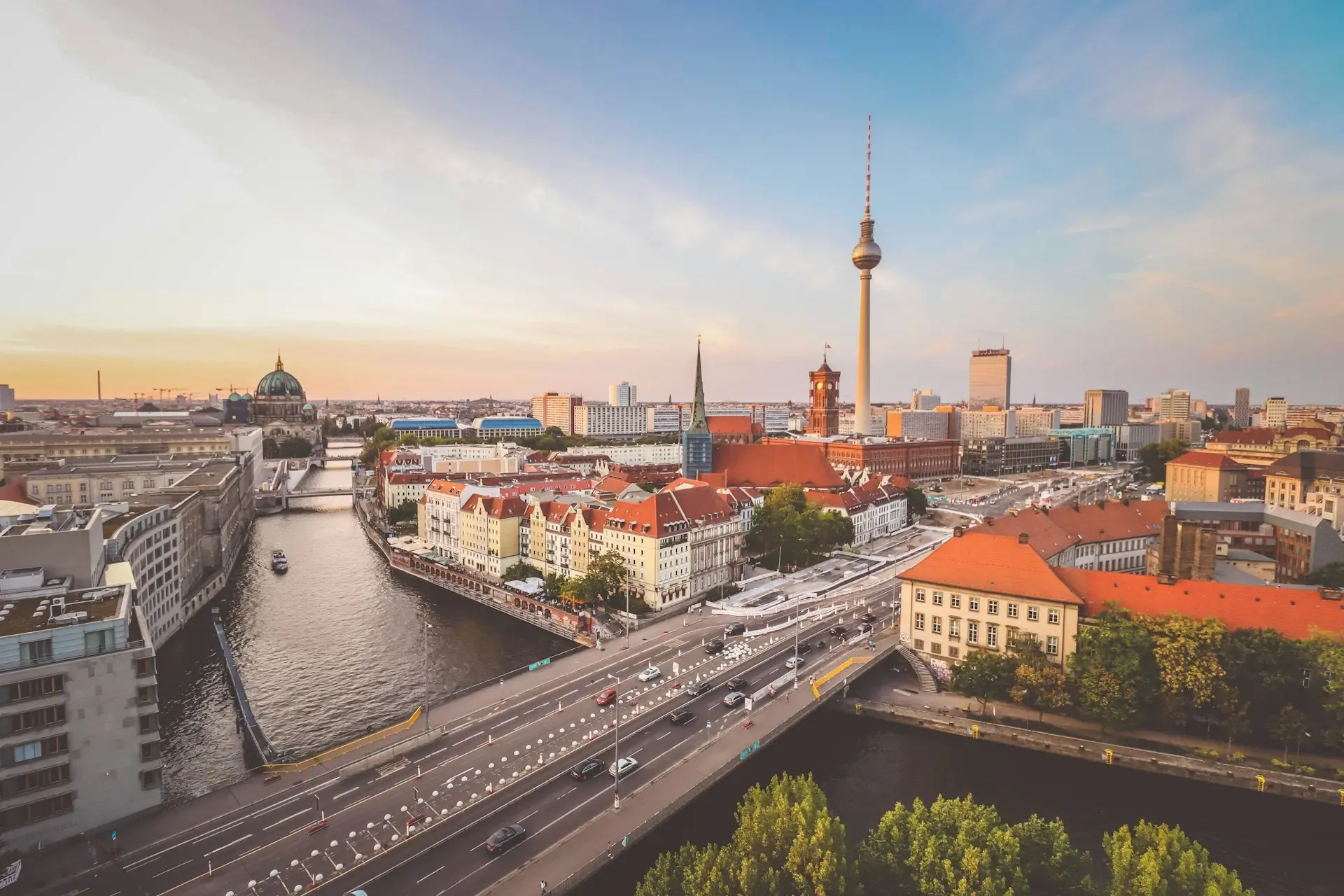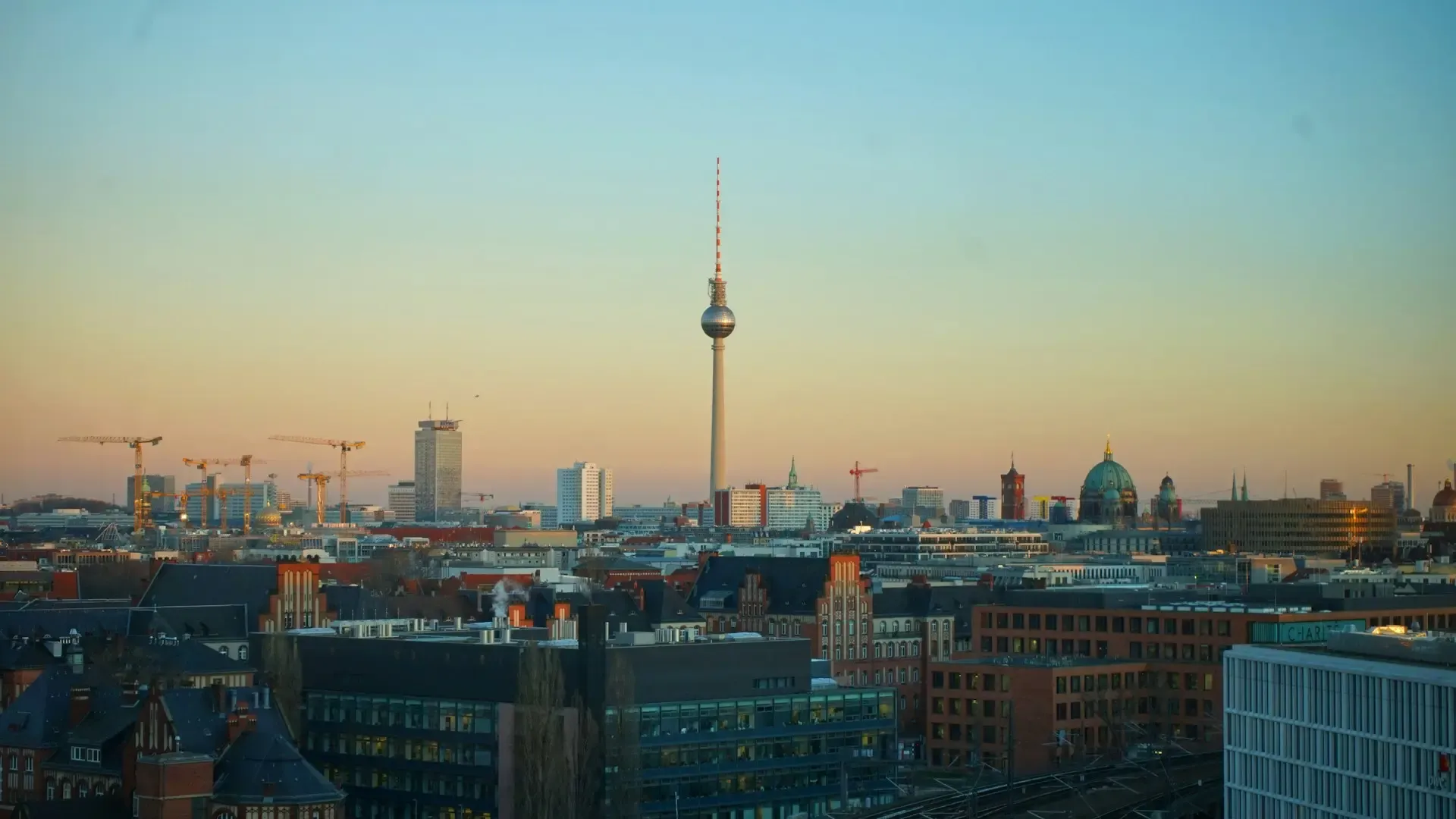

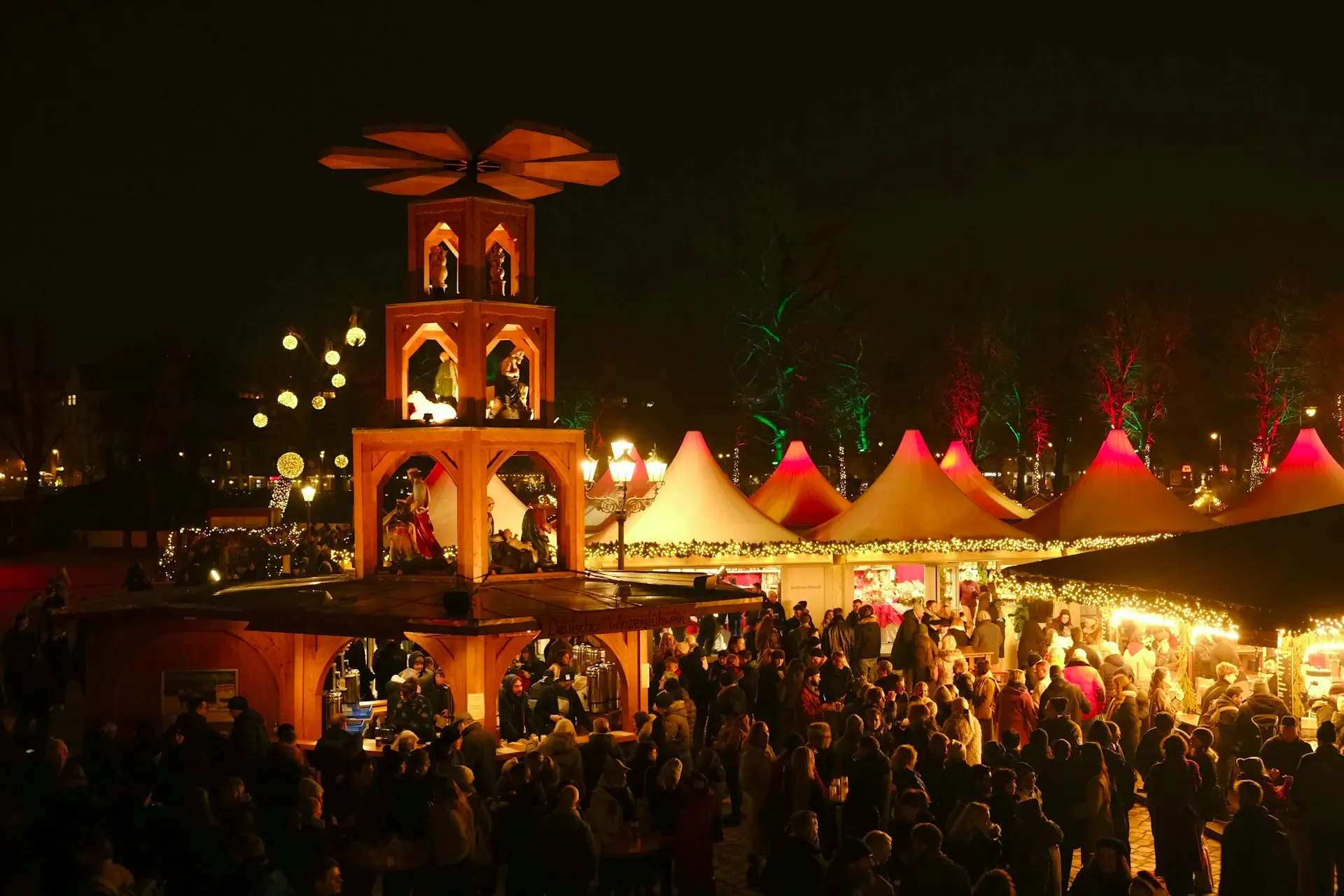
Berlin has so many Christmas markets that the difficult part is not finding one. It is choosing one worth crossing the city for. An elegant square with craft stalls, a palace lit up after dark, a Scandinavian courtyard, a medieval-style fair and a children’s ice rink all count as a Christmas market, but they are very different evenings.
For 2026, the main Christmas market season starts on 23 November, after Germany’s Remembrance Sunday on 22 November. Some winter markets open earlier, and a handful continue into January 2027. Below are my picks, the confirmed dates and practical details, and a way to visit several without spending half the night on trains. If you only have time for one, start with Gendarmenmarkt for crafts and atmosphere, Charlottenburg Palace for the setting, or Rotes Rathaus for a lively family outing.
Which Berlin Christmas market should you visit?
If you are visiting only one market, pick an experience rather than the closest famous name. For a beautiful backdrop and better-quality gifts, choose Gendarmenmarkt. For romantic palace photographs, go to Charlottenburg after sunset. For skating, a big wheel and a more playful atmosphere, choose Rotes Rathaus. For something that feels different from the standard market, try the Nordic-themed Lucia courtyard or the medieval-style RAW market.
| Comparison | 2026 dates | Entry | Best for | Nearest useful stop |
|---|---|---|---|---|
| Gendarmenmarkt | 23 Nov–31 Dec | €2; exceptions | Crafts, architecture, food | Stadtmitte / Hausvogteiplatz |
| Charlottenburg Palace | 23 Nov–27 Dec; closed 24 Dec | Free | Palace setting, couples | Bus M45 / 309, Schloss Charlottenburg |
| Rotes Rathaus | 23 Nov–3 Jan; closed 24 and 31 Dec | Check event pricing | Families, skating, big wheel | U Rotes Rathaus / Alexanderplatz |
| Humboldt Forum | 18 Nov–3 Jan; closed 22 Nov and 24 Dec | Free | Craft demonstrations, central route | U Museumsinsel |
| Lucia, Kulturbrauerei | 23 Nov–22 Dec | Free | Nordic atmosphere, cosy evenings | U Eberswalder Straße |
| Spandau Old Town | 23 Nov–22 Dec | Verify on operator page | Old-town stroll, browsing | U Altstadt Spandau |
| RAW medieval market | 12 Nov–22 Dec; closed 22 Nov | Fee to confirm | Medieval theme, unusual gifts | S+U Warschauer Straße |
| Alt-Rixdorf | 4–6 Dec only | Free | Charity stalls, old village atmosphere | S Sonnenallee / S Neukölln + walk |
| Alexanderplatz | 23 Nov–26 Dec | Free | Convenience, central sightseeing | S+U Alexanderplatz |
| Breitscheidplatz | 13 Nov–3 Jan (Berlin.de) | Free | City West, shopping, lights | Zoologischer Garten / Kurfürstendamm |
| Heissa Holzmarkt | 6 Nov–20 Dec; Wed–Sun | €2–€3 | Creative food, Spree-side setting | S Ostbahnhof + walk |
| Kollwitzplatz Advent market | 29 Nov, 6, 13, 20 Dec | Free | Fair-trade and sustainable gifts | U Senefelderplatz + walk |
| Späth Nursery | 28–29 Nov, 5–6, 12–13 Dec | €8 adult; reductions | Children, crafts, Christmas trees | Bus near Späthstraße 80 |
| Potsdamer Platz | 23 Nov–26 Dec | Check attractions | Winter sports with sightseeing | S+U Potsdamer Platz |
| Sophienstraße | Advent weekends | Free | Sustainable gifts, Hackesche Höfe | S Hackescher Markt |
The best Christmas markets in Berlin, with honest local recommendations
1. WeihnachtsZauber at Gendarmenmarkt: best for a classic Berlin Christmas evening
This is the market I would take a first-time visitor to if they wanted one especially memorable evening in central Berlin. The square is framed by the German Cathedral, French Cathedral and Konzerthaus. The white tents make it look more polished than a typical collection of wooden stalls, and the indoor crafts area gives you somewhere to browse when the weather becomes miserable.
The history here is in the architecture, not in a claim that the market itself is medieval. The square emerged as part of Berlin’s historic Friedrichstadt; its distinctive combination of domed churches and concert hall is why this is one of the city’s favourite photo locations. The present Christmas market is a modern event that has occasionally relocated during construction, so checking its exact location in any given year is sensible. For 2026 it is back on Gendarmenmarkt.
Expect glasswork, ceramics and other crafts alongside traditional treats and more expensive sit-down food. The main disadvantage is the admission fee and the feeling that some parts are designed for a special night out rather than a cheap snack. The small charge is reasonable if you want the setting and entertainment; it is not necessary just to sample Glühwein.
The organisers prohibit dogs except guide dogs, and their site details wheelchair access and security rules. To avoid paying admission, visit during an eligible weekday lunchtime, or come in the evening and consider the €2 part of the experience. Allow about an hour, longer if you plan to eat.
2. Charlottenburg Palace: best backdrop for a romantic market
The palace facade illuminated behind the stalls is the reason to come. Charlottenburg Palace grew from a royal summer residence associated with Sophie Charlotte into one of Berlin’s best-known Prussian palace complexes. You are not attending a centuries-old palace market; you are seeing today’s Christmas stalls against a genuinely historic landmark.
Go just before sunset if you want to see both the building and the lights. There are crafts, warming food tents and small children’s rides, making it a good compromise for couples travelling with kids. The palace grounds and nearby Berggruen and Bröhan museums offer a daytime companion, though museum opening hours and winter garden access need their own checks.
It is farther from Alexanderplatz than the map first suggests. Do not bolt it onto a tight Mitte itinerary without allowing transport time. If your hotel is in City West, however, it becomes one of the easiest Christmas evenings in Berlin. Allow 60–90 minutes.
3. Berliner Weihnachtszeit at Rotes Rathaus: best for families and fairground fun
This is not a discreet craft market. It is large, lively and full of reasons for children to stop every five minutes. Its nostalgic old-Berlin street scene, skating rink around the Neptune Fountain and Ferris wheel make it a much better family choice than a market selected only for photographs. Berlin.de also describes regular appearances by a flying Santa figure during the season.
The location is unusually useful. Rotes Rathaus is the red-brick town hall; St. Mary’s Church and the fountain anchor an area with several layers of Berlin history. A short walk takes you towards Nikolaiviertel or Alexanderplatz. If the weather turns, you can retreat to indoor attractions rather than spending an hour travelling.
The downside is noise, queues for rides and an atmosphere closer to a winter fair than a peaceful village. With small children, go earlier in the day, agree on a ride budget and plan a warm-up break. Allow 60–90 minutes, longer if skating.
4. Winter market at Humboldt Forum: best central add-on for crafts and architecture
This market is easy to miss if you are moving through Mitte too quickly. The reconstructed palace exterior and the modern museum complex of the Humboldt Forum make an unusual backdrop, especially after dark when the facade projections and lights become part of the experience. Look for woodworkers, potters and glassblowers demonstrating their crafts.
There is an interesting historical contrast here: the former Berlin Palace site was demolished in the GDR era and later reconstructed as the Humboldt Forum, while the courtyard retains a Baroque architectural language. It is worth treating this as a stop on a historic-centre walk rather than the sole reason to travel across Berlin.
Pair it with the Museum Island guide, Berlin Cathedral and the riverside. You can enjoy the main market in roughly 30–60 minutes.
5. Lucia Christmas Market at Kulturbrauerei: best for a Nordic winter evening
The appeal of Lucia is the atmosphere. An old industrial brick complex becomes a warm-looking pocket of Nordic winter, with small wooden stalls and traditional Scandinavian influences. Its name references Saint Lucia, celebrated on 13 December in Sweden and elsewhere as a symbol of light during the darkest part of the year.
The setting is a genuine part of Berlin’s industrial history. Kulturbrauerei was formerly a Schultheiss brewery, and its preserved nineteenth-century architecture is a reason to visit even when there is no market. It feels completely different from a grand square like Gendarmenmarkt.
This is one of my strongest picks for couples, groups of friends and families who want a manageable evening. The courtyard setting can also feel very busy, however. Explore nearby Kollwitzplatz, Kastanienallee or the cafés of Prenzlauer Berg beforehand instead of arriving only for a single drink. Allow about an hour.
6. Spandau Old Town: best for a proper old-town stroll
Spandau offers something central Mitte cannot: a historic town-centre walk that feels like its own destination. Spandau was a town long before it became part of Greater Berlin in 1920, and the streets around the church make a natural setting for gift shopping, food stalls and seasonal music.
Browse the side streets as well as the market square, then consider seeing the nearby Spandau Citadel if you have a full afternoon. Do not confuse this traditional old-town market with other Spandau winter fairs that focus more on rides. They may have different dates and locations.
The tradeoff is the journey. If you are staying in east Berlin, do not treat Spandau as a quick stop between two central markets. It works best as a half-day in its own right. Allow 90 minutes to two hours in the area.
7. Medieval Christmas Market at RAW-Gelände: best for an alternative night out
Instead of gingerbread-house perfection, imagine torches, craft demonstrations, jugglers and a medieval fair atmosphere. RAW stands for the former railway repair works whose industrial grounds later became a cultural and nightlife site. That contrast between industrial Berlin and deliberately old-fashioned crafts is precisely what makes the market memorable.
Children can enjoy hand-powered attractions and activities such as archery, while adults might prefer the spiced mead and street-food stalls. The medieval theme is entertainment, not a claim that the market has occupied this site since the Middle Ages.
The ground and entrances may be trickier than in a newly built shopping plaza. If access is important, RAW’s venue information identifies barrier-free entrances from Revaler Straße. Check market-specific paths before visiting. Allow an hour or more, and expect the area around Warschauer Straße to be lively late into the evening.
8. Alt-Rixdorfer Christmas Market: best for a short, special weekend
This is the market I would build a visit around on its weekend, rather than accidentally stumbling across. Oil and gas-style lighting, cobblestones and the village layout give it a distinctive glow. The deeper appeal is its charitable character: according to Berlin.de, roughly 200 stalls are run by non-profit associations and organisations, so purchases support their work.
Rixdorf was once a village separate from Berlin. Richardplatz and its old smithy still hint at that past, even though modern Neukölln surrounds it. The market makes sense in this particular location in a way that a generic stall village would not.
It can attract large crowds precisely because it is only on for three days. If you care about browsing handmade gifts, arrive earlier rather than at peak Saturday-evening time. If you are travelling on another December weekend, do not include it in your itinerary because it will not be operating. Allow at least an hour.
9. Alexanderplatz: easiest to fit around sightseeing
Alexanderplatz is practical rather than intimate. You are surrounded by transport connections, shopping, the World Clock and the television tower. The 2026 concept is advertised with a redesigned setting around the Friendship Fountain, so do not assume photographs from old seasons represent the exact layout this year.
This is useful as a quick stop before or after the Berlin TV Tower, not necessarily the market I would travel an hour to see. If you prefer charming courtyards, Lucia offers a stronger sense of place. If you need last-minute shopping and public transport, Alexanderplatz is hard to beat.
10. Breitscheidplatz: best for Christmas lights in City West
This is where a market works well alongside the Christmas lights and shops of Kurfürstendamm and Tauentzienstraße. You can combine a city-west stroll with festive snacks, crafts and the unusual landmark of the damaged Kaiser Wilhelm Memorial Church, preserved as a reminder of wartime destruction.
I live close to this market, so it’s the one I end up visiting most often. Over the years, stopping by has become part of my December routine in Berlin. If you’re staying around Ku’damm or Zoologischer Garten, it’s an easy market to enjoy without planning a whole evening around it.
The square is also the site of the 2016 Christmas market attack. A memorial honours those killed and affected. If you pass it, take a moment for reflection rather than treating that history as another photo opportunity.
Because published 2026 dates differ, check the organiser’s schedule near your intended visit. For a first visit I would choose this when staying in the west, not as a substitute for Gendarmenmarkt or Charlottenburg.
11. Heissa Holzmarkt: best for Berlin’s creative side
Holzmarkt is already an alternative riverside cultural project during the rest of the year. Its winter market reflects that personality with unusual food, handmade crafts and creative activities. You are more likely to encounter ramen, ceramics and independent makers alongside mulled wine than rows of identical souvenirs.
Berlin.de describes children’s activities such as storytelling, crafts, a circus workshop and indoor play, but confirm the programme for the day you intend to visit. It is a good pick for repeat visitors who want something less formal, especially when paired with an East Side or Friedrichshain outing.
12. Kollwitzplatz Advent Market: best for sustainable gifts
Rather than a daily tourist spectacle, this is a Sunday market with an ecological and fair-trade focus. Look for textiles, toys, jewellery, regional drinks and vegetarian or vegan snacks. It is a pleasant way to spend an Advent afternoon in Prenzlauer Berg, especially if you appreciate gifts with more of a story behind them.
Because it only happens on Sundays, it pairs naturally with nearby Lucia on a Sunday afternoon or early evening. Do the sustainable gift shopping first, then walk towards the courtyard for the lights.
13. Späth Nursery: best for a longer family afternoon
A tree nursery is an especially fitting place for a Christmas market. Späth’sche Baumschulen is a historic horticultural site and the festive weekend programme includes crafts, theatre inspired by fairy tales, music and Christmas trees. This is where I would spend more time rather than try to tick off three other markets in the same afternoon.
The entrance charge supports the historic site, and the official listing says the ticket can be used as a discount voucher on a tree purchase. The main drawback for visitors staying in Mitte is travel time. Consider it when the market itself is your main activity, not simply another stop after the Brandenburg Gate.
14. Potsdamer Platz: best for winter activities with easy connections
Potsdamer Platz’s winter offering is more about convenient city-centre activities than old-fashioned market charm. Its winter-sports elements and proximity to cinemas, shops and major sights make it an easy add-on to a sightseeing day. It is especially convenient if you are already exploring the former Berlin Wall corridor around Potsdamer Platz.
Do not assume every seasonal activity, such as the winter slide, has exactly the same dates as the Christmas stalls. Check the attraction separately before travelling specifically for it.
15. Sophienstraße: best for thoughtful gifts near Hackescher Markt
This longstanding ecological and crafts-focused Advent market is one for browsing rather than rides. Its central location makes it especially convenient before continuing towards the Humboldt Forum, Museum Island or the river. If you are looking for handmade gifts and want to avoid travelling to another district, put it on your weekend shortlist.
Because it is not an everyday market, confirm the exact weekend dates and operating hours before visiting.
Other winter markets worth knowing about
Lichtenberger Winterzeit runs from 31 October to 27 December 2026 at Landsberger Allee 300. It is more funfair than traditional Christmas market, with colourful rides and a family-day programme. Choose it for excitement, not for quiet craft shopping.
Winterquartier at Napoleon Komplex, Modersohnstraße 49a, runs from 6 November 2026 into February 2027. Berlin.de currently lists weekend opening hours and donation-based entry; skating and curling are the distinctive attractions. Check which parts of the event actually operate on your date.
Christmas Avenue at Nollendorfplatz celebrates Berlin’s LGBTQIA+ community with an inclusive programme and festive food. The Winterdays programme starts on 4 November and the wider Christmas Avenue continues towards 23 December. Check the operator’s current programme before visiting, as different stages of the event have different dates.
These are alternatives, not interchangeable versions of the classic market. The big advantage of Berlin is being able to choose your sort of Christmas evening.
A self-guided Christmas market route through central Berlin
If you only have one evening and are visiting for the first time, do not attempt to cross Berlin for five separate markets. Stay in Mitte, where several venues are within a reasonable walk of one another. The route below works best from 23 November to 22 December, when the main markets overlap.
| Time | Activity |
|---|---|
| 16:00 | Start at Alexanderplatz. Browse briefly, then walk towards Rotes Rathaus. |
| 16:30 | Spend 45–60 minutes at Rotes Rathaus. Skate or ride only if you have extra time. |
| 17:30 | Walk past the Berlin Palace to the Humboldt Forum winter market. Look for the illuminated facade and crafts. |
| 18:15 | Walk west towards Gendarmenmarkt, passing central Berlin landmarks along the way. |
| 18:45 | Finish at Gendarmenmarkt for the lights, crafts and dinner or a warm drink. |
Walking and browsing times are approximate, not a promise of queue lengths. The three main stops are Rotes Rathaus, Humboldt Forum and Gendarmenmarkt; Alexanderplatz is an optional warm-up. If you are visiting with toddlers, drop the final stop and give the family market more time. If shopping for handcrafted gifts is the priority, spend less time at Rotes Rathaus and more at Gendarmenmarkt.
For more detail about zones, tickets and ticket validation, read our Berlin public transport guide. If you want to combine markets with daytime sightseeing, see our two-day Berlin guide or the longer three-day itinerary.
Should you book a guided Christmas market tour?
You do not need a guide to enter ordinary Berlin Christmas markets. Most are public spaces with free or low-cost admission, and you can walk between central markets yourself. A guide can still be worth paying for if you have limited time, want stories about the traditions, or would rather have someone arrange the route and group timing.
GetYourGuide lists Berlin Christmas-market walking tours in its Berlin catalogue, but I could not independently verify a stable product ID and its 2026 bookability well enough to place a specific affiliate widget. Original Berlin Walks separately advertises a two-hour English-language Christmas walk for 23 November to 23 December 2026 through visitBerlin, beginning at Hackescher Markt and ending at Gendarmenmarkt. Check the official visitBerlin guided tour page for dates, availability, inclusions and the optional Gendarmenmarkt entrance fee.
If you prefer to spend the money on food and gifts, follow the self-guided route above instead. A guided tour is a convenience, not an essential ticket.
What to eat and drink at Berlin Christmas markets
Glühwein is the classic warm spiced wine. Ask for Kinderpunsch if you want a non-alcoholic hot fruit punch. Drinks often come in special mugs with a refundable Pfand deposit. Return the mug to reclaim the deposit or keep it as a souvenir. Deposit amounts vary by stall and market, so ask rather than assuming your first price includes the cup.
For something substantial, look for bratwurst, mushrooms from a large pan, potato pancakes (Kartoffelpuffer), or Grünkohl with hearty sides where available. Sweet choices might include roasted almonds (gebrannte Mandeln), gingerbread (Lebkuchen), quark balls (Quarkbällchen), waffles or Stollen, the fruit-and-nut Christmas loaf associated especially with Dresden.
Not every vendor is traditional, and that is one of Berlin’s advantages. At Holzmarkt or other creative markets you may find international street food and vegetarian or vegan options. Check allergens at the counter if necessary; do not assume a dish is nut-free or dairy-free because it looks simple.
Useful German phrases: Ein Glühwein, bitte (one mulled wine, please); Gibt es Kinderpunsch? (do you have alcohol-free punch?); Ist das vegetarisch? (is this vegetarian?); Wie viel Pfand? (how much is the deposit?); Kann ich mit Karte zahlen? (can I pay by card?).
Are Berlin Christmas markets expensive?
Often the market itself is free, which makes browsing inexpensive. The spending comes from drinks, food, rides, skating, paid craft workshops and a few admission charges. Markets vary enormously, and precise food prices change between stalls and years.
A sensible budget is to decide how much you want to spend before arriving. One shared snack and a warm drink can make a satisfying stop without booking anything. If you are visiting several markets, do not buy a full meal at the first one by default. Walk around, compare the food and choose what actually appeals to you.
The 2026 entrance fees confirmed in official listings include €2 for Gendarmenmarkt with time-based concessions, €2–€3 for Heissa Holzmarkt, and €8 general admission for Späth Nursery with reductions and free entry for young children. RAW and some other organisers had not yet finalised their price information when this guide was checked.
Christmas markets with children, accessibility and winter weather
The obvious family choice is Rotes Rathaus because children have things to do beyond looking at stalls. Späth Nursery is another strong choice if you can commit to one of its weekend dates. Lucia is atmospheric but the courtyard can become crowded, and an old-town or medieval setting may have rough ground or limited space for strollers.
For toddlers, I would prioritise an early visit, one market and an indoor break. Two warm, happy hours are better than dragging a tired child across three districts. Our guide to Berlin with kids has options for the rest of your trip.
If you use a wheelchair or have limited mobility, check each venue rather than assuming that every market square is fully accessible. Gendarmenmarkt publishes accessible transport and admission concessions; Kulturbrauerei and RAW have more than one entrance, and accessibility can vary within the site. The surrounding streets, cobblestones, temporary flooring, toilets and ice-related hazards may be more important than the nearest station. BVG publishes lift and disruption updates.
Dress in layers, with warm socks and shoes that cope with wet paving. Even without snow, spending an hour standing outdoors can feel colder than walking through the city. A compact umbrella is useful, but crowds make it awkward, so a hood and water-resistant coat are often simpler.
Which Christmas markets are open on Christmas Eve and after Christmas?
Christmas Eve, 24 December, is a common closure day, and you cannot assume that a market running through 26 December is open on 24 December. The official 2026 schedules specifically list closures on 24 December for Charlottenburg Palace, Rotes Rathaus and Humboldt Forum. Gendarmenmarkt is an exception: the organiser advertises shortened 11:00–18:00 hours on 24 December.
If you arrive 25–31 December, consider Gendarmenmarkt (to 31 December), Rotes Rathaus (to 3 January), Humboldt Forum (to 3 January), Charlottenburg Palace (to 27 December), Breitscheidplatz (Berlin.de lists to 3 January) or the remaining days of Alexanderplatz and Potsdamer Platz (both listed to 26 December). Always check holiday-specific hours, especially on 25 and 26 December.
If you visit after New Year’s Day, your traditional-market choices shrink. Rotes Rathaus and Humboldt Forum are listed through 3 January 2027, as is Breitscheidplatz on Berlin.de. Winterquartier continues into February but is a different type of winter attraction.
Christmas markets, winter lights and other bookable experiences
Christmas markets are only one part of winter in Berlin. Separate ticketed light trails can be worthwhile if you want a more structured evening, especially for children who have had enough of food stalls. Christmas at the Tierpark is a seasonal illuminated walk in the large eastern Berlin zoo, not a conventional Christmas market. Its event schedule runs from late November into January, and advance time-slot booking can matter.
For dates and tickets, use the official Christmas at the Tierpark booking website. The illuminated walk is scheduled from 20 November 2026 to 9 January 2027, with several closed dates and timed entry.
If you would rather remain in the city centre, the Berlin boat tour guide explains what to check before choosing a cruise, including seasonal route differences. Do not assume a standard summer cruise operates in December.
A little history: why Germany loves Christmas markets
German Christmas markets are rooted in medieval and early-modern winter trading traditions, when towns organised markets for provisions and seasonal goods before the holiday. The best-known older examples include Dresden’s Striezelmarkt, traditionally dated to 1434, and historic markets in other German-speaking cities. Berlin’s current scene is much more varied, and many of its most popular events are recent creations rather than centuries-old institutions.
The vocabulary is useful: Weihnachtsmarkt means Christmas market; Adventsmarkt is an Advent market, usually linked to the four Sundays before Christmas; Wintermarkt or Winterwelt may indicate a wider winter programme that opens earlier or continues into January. That explains why a list of Berlin Christmas markets can include a medieval-themed fair, a seasonal funfair, an ecological Sunday market and a palace square.
The calendar matters too. Germany observes Totensonntag, a Protestant day of remembrance, on the Sunday before Advent. In 2026 that date is 22 November, explaining the common Monday 23 November opening for traditional markets. Some venues operate earlier under winter-market programmes.
How to fit Christmas markets into your Berlin trip
For two days in Berlin, visit one central market after sightseeing rather than redesigning your whole route. For three or four days, choose one classic evening and one different atmosphere, such as Gendarmenmarkt and Lucia. If you are staying around City West, the combination of Charlottenburg Palace and Breitscheidplatz makes more sense than returning to Mitte for every evening.
Our where to stay in Berlin guide explains why a station and neighbourhood matter more than a hotel being labelled “central”. For the broader trip, use things to do in Berlin to balance markets with history, museums and neighbourhoods.
Frequently asked questions
When do Berlin Christmas markets open in 2026?
Most main Christmas markets open on Monday 23 November 2026. Some winter markets open earlier in November; individual dates vary.
What is the best Christmas market in Berlin?
For a first visit choose Gendarmenmarkt for its grand architecture and crafts, Charlottenburg Palace for a romantic backdrop, or Rotes Rathaus for family activities.
Which Christmas markets in Berlin are free?
Charlottenburg Palace, Lucia at Kulturbrauerei, Alexanderplatz, Humboldt Forum and many district markets offer free entry. Gendarmenmarkt generally charges €2 outside its stated free-entry period.
Are Christmas markets in Berlin open on Christmas Eve?
Many close on 24 December. Gendarmenmarkt advertises shorter hours, 11:00–18:00, while Rotes Rathaus, Charlottenburg Palace and Humboldt Forum list closures. Check the current market-specific calendar.
Which Berlin Christmas markets remain open after Christmas?
Gendarmenmarkt runs to 31 December; Rotes Rathaus and Humboldt Forum are scheduled through 3 January 2027. Charlottenburg Palace runs to 27 December. Verify holiday hours and changes.
How many markets can I visit in one evening?
Two or three nearby markets are enjoyable; more makes the evening rushed. Try Rotes Rathaus, Humboldt Forum and Gendarmenmarkt on foot.
Which Christmas market is best with toddlers?
Rotes Rathaus has family-oriented activities such as its Ferris wheel and ice rink. Go in the early afternoon and keep the outing short; rides can cost extra.
Do I need tickets for Berlin Christmas markets?
Most do not need advance booking. Certain markets charge modest admission; book specific guided walks, skating or timed light trails only when that experience requires it.
Can I pay by card at Berlin Christmas markets?
Some vendors take cards but small stalls may be cash-only. Bring a little cash, especially for cup deposits and snacks.
Do the Christmas markets open if it rains or snows?
Markets generally operate in normal winter weather, though events can close for high winds or other safety reasons. Check organiser updates on the day.
Official sources and how this guide is kept accurate
The dates and fees above were checked on 2 November 2026 against official Berlin.de, visitBerlin, event organisers and transport or venue resources. Some market-specific 2026 details are not yet final, and Berlin.de and visitBerlin occasionally disagree about seasonal dates. This is why unverified hours or fees are labelled rather than guessed. Before a long cross-city trip, follow the organiser’s page for last-minute changes.
Sources
- Berlin.de: Christmas markets 2026 (opens in a new tab)Official seasonal overview and district listings.
- visitBerlin: Christmas markets (opens in a new tab)2026 market dates, addresses and tourism guidance.
- Gendarmenmarkt official organiser (opens in a new tab)2026 opening hours, entry concessions, access and rules.
- Berlin.de: Charlottenburg Palace market (opens in a new tab)Dates, admission, opening hours and transport.
- Berlin.de: Rotes Rathaus market (opens in a new tab)Skating, rides, 2026 dates and closures.
- Berlin.de: Humboldt Forum winter market (opens in a new tab)Dates, opening, crafts and projection programme.
- Berlin.de: Lucia at Kulturbrauerei (opens in a new tab)Nordic theme, 2026 hours and admission.
- Berlin.de: Spandau Old Town (opens in a new tab)2026 dates and market location.
- Berlin.de: medieval RAW market (opens in a new tab)2026 hours, programme and closure.
- Berlin.de: Alt-Rixdorf (opens in a new tab)Charitable concept and 4–6 December dates.
- visitBerlin: Alexanderplatz Christmas market (opens in a new tab)2026 redesign, hours, admission and transport.
- Berlin.de: Breitscheidplatz market (opens in a new tab)City West dates and admission; compare conflicting sources.
- Berlin.de: Heissa Holzmarkt (opens in a new tab)Hours, fees, food and activities.
- Berlin.de: Kollwitzplatz Advent market (opens in a new tab)Four Advent Sundays and eco-fair-trade focus.
- Berlin.de: Späth Nursery market (opens in a new tab)Weekend programme, hours and ticket prices.
- Berlin.de: markets open after Christmas (opens in a new tab)Markets operating after 24 December.
- visitBerlin: Christmas markets guided tour (opens in a new tab)2026 guided-tour dates, route, language and inclusions; separate from the GetYourGuide listing.