

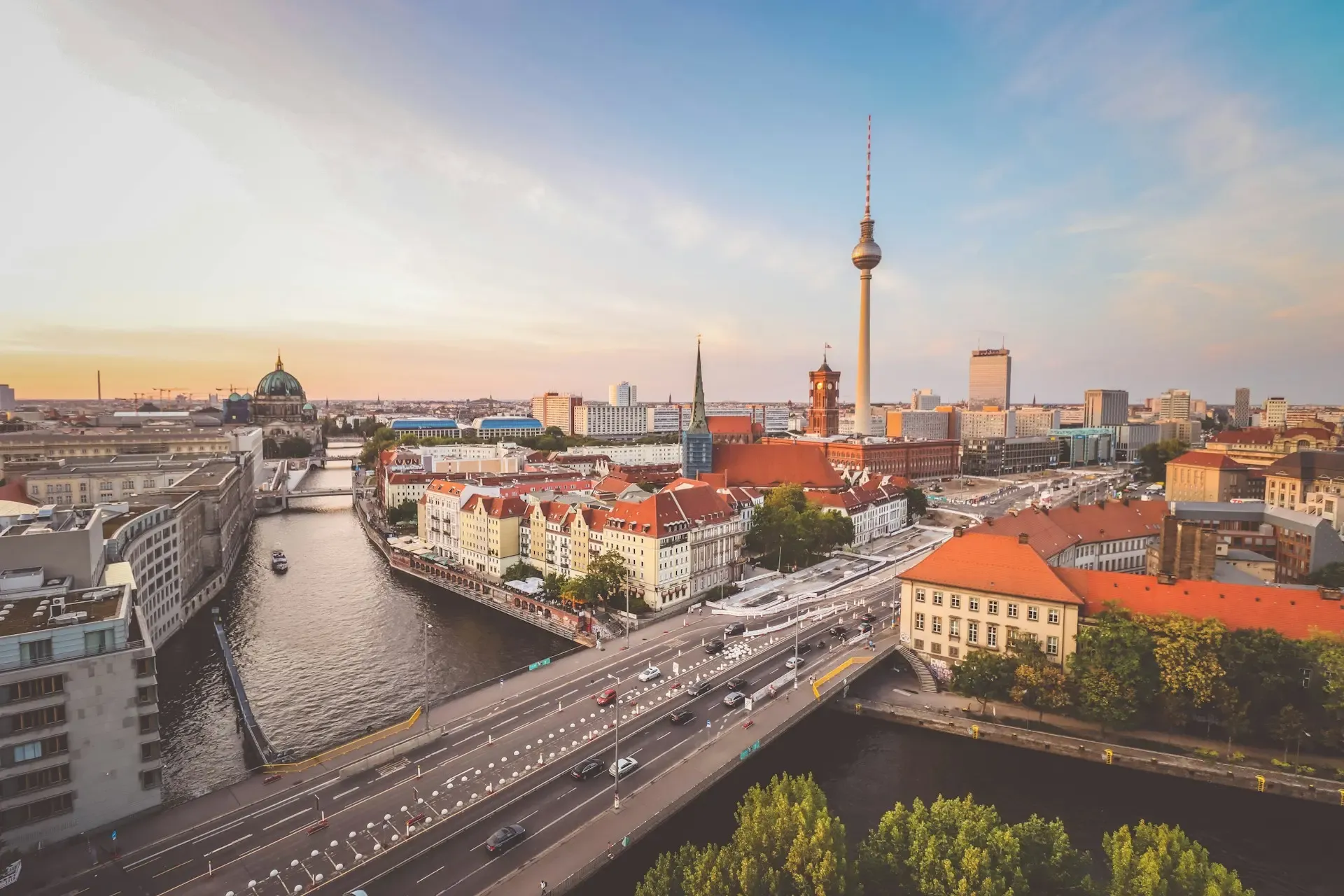
Berlin is easy to overplan because the city offers too many different versions of a good trip.
You can spend a day on twentieth-century history, disappear into museums, cross the city for nightlife, cycle an old airport runway, eat your way through Kreuzberg, take a boat through the government district, or leave Berlin entirely for Potsdam or the Spreewald. None of those choices is automatically better than the others.
This guide is a discovery hub rather than an itinerary. Use it to decide what fits your interests, budget, weather, travel companions and available time. If this is your first trip and you mainly want the essential sights, start with our first-time Berlin guide. If you already know how long you have, the itinerary links near the end will turn these ideas into a realistic route.
The short answer: what are the best things to do in Berlin?
A strong Berlin trip usually mixes different types of experience rather than collecting landmarks. See the Brandenburg Gate and Reichstag area, spend time with the city’s Wall or twentieth-century history, choose one museum that genuinely interests you, explore at least one neighbourhood outside the historic centre, and leave room for something that feels less like sightseeing: a park, canal walk, food stop, boat ride, evening out or day trip.
Use this table as a chooser, not a ranking.
| Comparison | Best for | Time needed | Cost | Book ahead? | Area |
|---|---|---|---|---|---|
| Brandenburg Gate + Reichstag area | First visits, politics, architecture | 1.5 to 3 hours | Free | Yes for Reichstag dome | Mitte |
| Berlin Wall Memorial | Cold War history | 1.5 to 2 hours | Free | No | Mitte / Wedding edge |
| Museum Island | Museums, architecture, central Berlin | 2 to 4 hours | Mixed | Sometimes | Mitte |
| Kreuzberg | Food, canals, bars, street life | Half-day or evening | Mixed | No | Kreuzberg |
| Tempelhofer Feld | Outdoor Berlin, cycling, space | 1.5 to 3 hours | Free | No | Tempelhof / Neukölln edge |
| Spree cruise | Low-effort sightseeing, mixed-energy groups | 1 to 2.5 hours | Paid | Useful in busy periods | Central Berlin |
| Berlin food experience | Food, neighbourhood context | 2.5 to 4 hours | Paid or self-guided | For guided tours | Varies |
| TV Tower | Panoramic views, first trips | 1 to 1.5 hours | Paid | Yes if timing matters | Alexanderplatz |
| Berlin nightlife | Bars, clubs, shows, late evenings | Evening | Mixed | For shows, not usually for bars | Varies |
| Teufelsberg / alternative Berlin | Cold War layers, street art, unusual spaces | 2 to 4 hours | Paid | Usually optional | Grunewald |
| Potsdam | Palaces, gardens, architecture | Full day | Mixed | Useful for palace time slots | Potsdam |
| Spreewald | Nature, waterways, a break from the city | Full day | Mixed | Useful for guided trips | Brandenburg |
Start with the Berlin essentials, then move beyond them
Some famous Berlin sights really are worth seeing. The mistake is allowing them to become the entire trip.
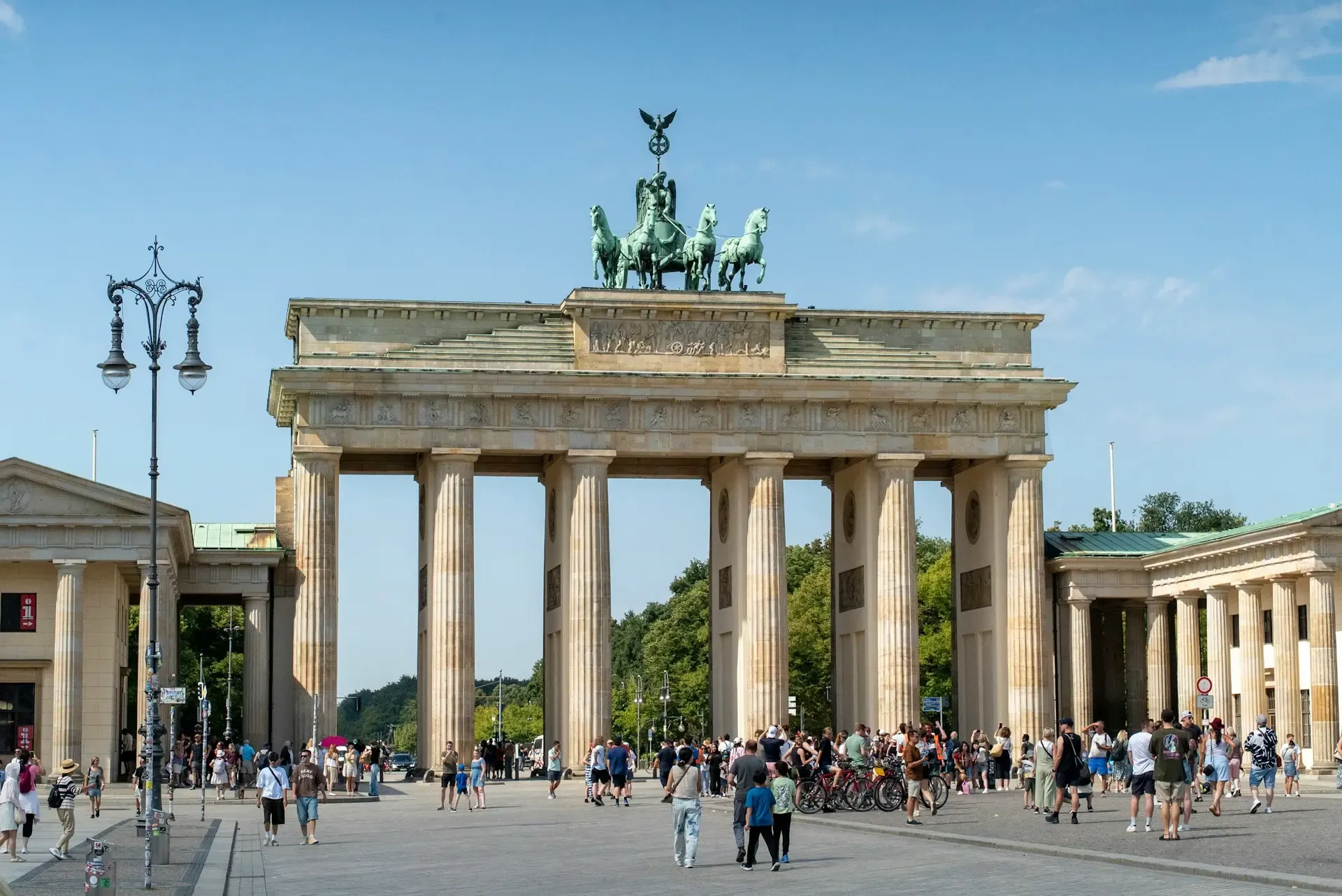
The Brandenburg Gate is an obvious first stop, but it only needs a short visit on its own. Its value comes from what sits around it: the Reichstag, the government quarter, the Memorial to the Murdered Jews of Europe and the route east along Unter den Linden.
The Reichstag is different. The public visit to the roof terrace and dome is free, but advance registration is required. That makes it one of the few free experiences in Berlin that can shape the rest of your schedule, so organize it early if it matters to you.
Museum Island deserves time even if you do not enter a museum. The architecture, Lustgarten, Berlin Cathedral, Humboldt Forum and Spree all make the area worth walking. If you do want a museum, choose one deliberately rather than trying to collect several in a row.
Alexanderplatz and the TV Tower are another choice rather than an obligation. The tower is useful when you want a fast visual overview of Berlin and the weather is clear. If you are on a strict budget or already have another viewpoint planned, you can skip it without feeling that you missed the city. Our Berlin TV Tower guide goes into tickets, timing and the trade-offs in detail.
For a much more detailed first-trip priority list, including what can wait, use our guide to what to see in Berlin for the first time.
For history: understand the Wall instead of only photographing it
Berlin’s twentieth-century history is spread across the city. You get more from it when you choose places that explain different parts of the story rather than trying to visit every memorial.
Berlin Wall Memorial for understanding the border
If you choose only one Wall site for historical context, make it the Berlin Wall Memorial on Bernauer Strasse. The outdoor site runs along the former border strip and explains how the barrier worked in an actual urban neighbourhood. It is much better for understanding division, escape attempts and daily life than a quick photo beside a piece of concrete.
Give it at least 90 minutes. It is free, mostly outdoors and easy to combine with Prenzlauer Berg or Mauerpark rather than with the East Side Gallery on the same walk.
East Side Gallery for art and scale
The East Side Gallery gives you a very different experience. You are walking beside a long surviving section of the Wall covered with murals, with the Spree and Oberbaum Bridge nearby. It works especially well before an evening in Friedrichshain or Kreuzberg.
It is one of those Berlin places where the surroundings matter. Do not take two photos and immediately leave. Walk toward the bridge, cross the river and continue into the neighbourhoods on either side.
Topography of Terror for Nazi-era history
The Topography of Terror occupies the former site of the Gestapo, SS and Reich Security Main Office. Admission is free, and the permanent exhibition is substantial enough to deserve a proper visit rather than being treated as a quick add-on to Checkpoint Charlie.
Checkpoint Charlie itself is historically famous but visually reconstructed and highly commercial. It is still worth a short stop if you are curious because it sits nearby. Just do not confuse fame with depth.
A guided history walk can be worth paying for when your main goal is context. Berlin’s historical sites are geographically close enough in places to walk, but the connections between the Weimar Republic, Nazi dictatorship, war, division and Cold War are not obvious from the streets alone. If you already know the history well, doing the sites independently is completely reasonable.
For museums and culture: choose depth over museum collecting
Berlin has enough museums for several trips. Trying to “do the museums” is a good way to spend a lot of money and remember very little.
Museum Island is the obvious starting point for ancient history, art and architecture. The key planning fact in 2026 is that the Pergamonmuseum remains closed during renovation, with major sections scheduled to reopen on 4 June 2027. Do not build a museum day around an outdated guide that still treats it as normally open.
For most first-time visitors who want one Museum Island collection, the Neues Museum is a strong choice. If your interest is elsewhere, Berlin gives you much better alternatives than forcing yourself through an ancient-history collection because it appears on every checklist.
The Jewish Museum works best when modern German and Jewish history is a major interest. The Museum für Naturkunde is an easier all-age choice, especially if dinosaurs, nature or a rainy afternoon sound more appealing than classical art. The Deutsches Technikmuseum and Science Center Spectrum are excellent when you want something interactive rather than contemplative. Futurium is useful for a free, central indoor stop and works particularly well with older children and curious adults.
For contemporary art and modern architecture, look beyond Museum Island. Hamburger Bahnhof and Neue Nationalgalerie serve very different interests and sit in different parts of the city, so choose based on the collection rather than prestige.
If Museum Island is your priority, our relaxed Museum Island morning guide helps you choose one collection and avoid turning the visit into a race.
For neighbourhoods: leave the historic centre
This is where Berlin stops feeling like a collection of monuments.
The city changes character quickly, and no single neighbourhood represents “local Berlin.” The useful question is what kind of afternoon or evening you want.
| Comparison | Go for | Pair it with | Best time |
|---|---|---|---|
| Kreuzberg | Food, canals, bars, street life and Turkish-German Berlin | Jewish Museum, Topography of Terror, Oberbaum Bridge | Late afternoon into evening |
| Friedrichshain | East Side Gallery, bars, RAW area and eastern Berlin atmosphere | Oberbaum Bridge, Kreuzberg | Afternoon into late evening |
| Prenzlauer Berg | Cafes, residential streets, Mauerpark and a slower pace | Berlin Wall Memorial | Morning or afternoon |
| Neukölln | Food, bars, canals and contemporary everyday Berlin | Tempelhofer Feld, Kreuzberg | Late afternoon and evening |
| Charlottenburg | City West, palace, classic architecture and calmer evenings | Kurfürstendamm, Kaiser Wilhelm Memorial Church | Half-day |
Kreuzberg
Kreuzberg is the easiest area to recommend when someone wants Berlin beyond the postcard centre. You can move from museums and nineteenth-century streets to the Landwehrkanal, Turkish bakeries, bars and busy restaurant areas without needing one headline attraction.
Do not treat “Kreuzberg” as one point on a map. The area around Bergmannkiez feels different from the canal, Kottbusser Tor or the streets close to Schlesisches Tor. Pick a small part and walk it.
Friedrichshain
Friedrichshain is a natural continuation after the East Side Gallery. Boxhagener Platz, residential streets, bars and the RAW area give you a stronger sense of eastern Berlin after reunification than staying around Alexanderplatz.
It also works well for nightlife, but you do not need to stay out until sunrise for the area to be worth visiting.
Prenzlauer Berg
Prenzlauer Berg is useful when you want a quieter contrast. Restored residential streets, cafes, playgrounds, Mauerpark and easy access from the Berlin Wall Memorial make it one of the simplest half-day combinations in the city.
Neukölln
Neukölln rewards visitors who like food, bars and walking without a fixed attraction list. Parts of the district change dramatically from one street to another, so it is better explored as an area than “seen” in one stop. Its northern sections pair naturally with Kreuzberg and Tempelhofer Feld.
Charlottenburg
Charlottenburg is the strongest reminder that Berlin is not only Mitte and the former East. Charlottenburg Palace, Kurfürstendamm, the Kaiser Wilhelm Memorial Church and the streets around Savignyplatz make a coherent City West day.
For everyday Berlin: parks, canals and reused spaces
Some of Berlin’s best experiences are not conventional attractions at all.
Tempelhofer Feld
The former Tempelhof airfield is now an enormous public open space where people cycle, skate, picnic, garden and simply use the old runways as room to breathe. It is one of the clearest examples of Berlin reusing a place rather than turning it into a polished attraction.
Tempelhofer Feld is fantastic in dry, mild weather and much less appealing in heavy rain, strong wind or extreme heat because it is so exposed. Check the seasonal closing time if you plan to arrive late, because the field gates do not stay open all night.
Tiergarten
Tiergarten works best as part of a day rather than as a cross-city destination. It gives you a break between the government district, Brandenburg Gate, Victory Column and City West. If the weather is good, walking through the park can be more useful than adding one more indoor attraction.
Landwehrkanal
The Landwehrkanal is Berlin at a slower pace. It makes the most sense when you are already in Kreuzberg or Neukölln: walk, sit by the water, stop for food, then continue through the neighbourhood. There is no single “canal attraction” to complete.
Mauerpark
Mauerpark works differently depending on the day. On a quiet weekday it is simply a park with traces of the former border zone. On busier market or event days it can feel like an outdoor social space. If a market or karaoke atmosphere is the reason you are going, check the current schedule rather than assuming it happens every day.
For food: eat the city rather than chasing one famous stand
Berlin food is more interesting as a mix of migration, neighbourhoods and everyday habits than as a list of “must-eat” dishes.
Yes, try currywurst if you are curious. Try döner too. But neither is worth losing an hour because one specific kiosk appears in every guide. The better food days come from being in the right neighbourhood at the right time.
Kreuzberg is an obvious choice for Turkish-German food, bakeries and casual eating. Neukölln gives you a wide range of Middle Eastern, Mediterranean and newer independent places. Charlottenburg can be better for classic restaurants and City West dining. Around Prenzlauer Berg and Mitte, cafes and bakeries make it easy to build food into a sightseeing day without a dedicated detour.
Markets can be useful, but check the day and current schedule before designing your trip around one. Berlin markets are not all daily attractions.
A guided food tour makes sense when you want two things at once: several tastings and neighbourhood context. It is less useful if you already have a long restaurant list and enjoy exploring independently.
For evenings: Berlin after sightseeing
Berlin at night is much broader than clubbing, and that matters if your trip includes people with different energy levels.
A simple evening can be dinner and bars in Kreuzberg, Neukölln, Friedrichshain or Prenzlauer Berg. You can also choose a concert, theatre performance, comedy, opera or a large production around Potsdamer Platz and Friedrichstrasse. In summer, long daylight makes parks and riverside areas part of the evening rather than just daytime stops.
If you do want clubs, treat the night as its own plan. Famous Berlin clubs are not ordinary attractions with predictable entry, and advance planning does not guarantee admission unless you are attending a ticketed event with explicit terms. Go because you enjoy club culture, not because a Berlin checklist tells you that a specific door is mandatory.
For a scheduled evening that does not depend on nightlife door policies, Cirque du Soleil’s resident ALIZÉ production is one current option. Our ALIZÉ Berlin guide covers runtime, age rules, venue and ticket considerations.
See Berlin from the water
A Spree cruise is not essential, but it solves a very specific travel problem well: you want to keep seeing the city without walking for another two hours.
Short central cruises pass the government district and major architecture along the river. Longer options can extend toward more residential, industrial or green parts of the waterways. They are especially useful for mixed-energy groups, families with children who tolerate sitting, and visitors who need a slower afternoon.
Weather changes the value considerably. On a clear, mild day, the open-air view can be excellent. In cold rain, a boat is only a good idea if the vessel and seating setup still match what you want. Season and operating schedules also matter more than with a museum.
Do not book the longest cruise automatically. If your trip is short, one hour can be enough to rest your legs and see central Berlin from a new angle. If the waterways themselves are the experience, then a two-hour-plus cruise makes more sense.
Choose by budget, weather and who you are travelling with
Berlin becomes easier when you stop asking for the “best” activity and start filtering by your actual conditions.
Free things to do in Berlin
You can build an excellent Berlin day without paying admission.
The Brandenburg Gate, the Memorial to the Murdered Jews of Europe, Berlin Wall Memorial, East Side Gallery, Topography of Terror, Tiergarten and Tempelhofer Feld can all be experienced without an admission ticket. The Reichstag roof terrace and dome are also free, although registration is required.
Free does not mean second-best here. Several of Berlin’s most important historical places are intentionally accessible without a paid ticket.
If your budget is tight, spend money selectively on the thing that changes the experience for you: one museum, one viewpoint, one guided tour, a show or a day trip. Do not buy a pass or bundle just because it sounds efficient. Compare it with what you will genuinely use.
Things to do in Berlin when it rains
Rain is when a flexible plan beats a perfect itinerary.
Museum Island is an obvious fallback, but it is not the only one. The Deutsches Technikmuseum, Museum für Naturkunde, Jewish Museum, Futurium, Neue Nationalgalerie and other major institutions can anchor a wet half-day depending on your interests.
Do not save every museum for the rain, though. If one collection is the reason you came to Berlin, give it the time it deserves regardless of weather.
For a more commercial indoor experience, places such as Dark Matter can be useful when you want something visual and contemporary rather than another conventional museum. But novelty alone is not a reason to cross the city. Check whether it fits your group first.
Berlin with kids
Berlin works well with children when you plan around age, weather and energy instead of shrinking an adult itinerary.
Zoo Berlin, Museum für Naturkunde, Deutsches Technikmuseum and Spectrum, ANOHA, parks and a short Spree cruise are all strong family choices in the right circumstances. The city is large, so the main family planning rule is to stop stacking activities that require long transfers.
Our things to do in Berlin with kids guide compares activities by age, rain, budget and energy level. If you need a route rather than ideas, start from the family itineraries linked there.
Berlin for couples
Berlin is better for couples when you avoid trying to manufacture “romance” around generic luxury activities.
A good couples day can be a slow neighbourhood, a museum you both care about, the Landwehrkanal, a long dinner, a clear-weather viewpoint, a boat ride, a concert or an afternoon at a lake in summer. The advantage of Berlin is variety, not one signature romantic experience.
If you disagree about museums, nightlife or history, split the day. Berlin’s public transport makes it easier to meet again for dinner than to spend four hours dragging one person through somebody else’s priority.
Unusual and alternative things to do in Berlin
“Alternative Berlin” can become a meaningless label if it simply means anything outside the Brandenburg Gate. Look for places that actually reveal something about the city.
Teufelsberg
Teufelsberg combines Cold War infrastructure, a former listening station, street art and views from the Grunewald area. It is far enough from central Berlin that it should be a deliberate half-day, not an accidental extra stop.
Go if the Cold War, abandoned architecture or street art interest you. Skip it on a short first trip if you would rather use those hours in central history or a neighbourhood.
Berliner Unterwelten
Berlin’s underground tours are valuable because they provide access and interpretation you cannot easily reproduce by yourself. Tour themes and availability vary, so choose one according to the history you actually care about rather than booking the first “bunker tour” you find.
Tempelhof airport history
Tempelhofer Feld is free as public open space, while guided access to parts of the former airport complex is a different experience. If architecture, aviation or twentieth-century Berlin is the point, a tour can add context. If you mainly want the runways and atmosphere, simply use the field.
Hidden courtyards and reused industrial spaces
Hackesche Höfe is the polished central example, but the broader Berlin idea is more interesting: inner courtyards, old industrial buildings and railway spaces have repeatedly been reused for culture, work, nightlife and housing.
Do not turn every courtyard into a scavenger hunt. Notice them while you explore areas that already fit your day.
Berlin changes with the season
The same activity can be brilliant in July and miserable in February.
Spring
Spring is one of the easiest times for mixed plans. Walking, parks and neighbourhoods become attractive again, but museums remain useful when the weather changes quickly. This is a good season to keep afternoons flexible.
Summer
Summer is for long evenings, lakes, parks, Tempelhofer Feld, beer gardens, outdoor culture and boat trips. It is also when exposed spaces can become very hot and when popular time-specific experiences can be busier.
If you want a lake day, treat it as a real half-day or full-day rather than adding it after central sightseeing.
Autumn
Autumn is strong for walking, museums and culture. The weather can still support long neighbourhood days, while cooler temperatures make serious indoor history visits easier to combine with the rest of the city.
Winter
Winter shifts the balance indoors. Museums, shows, cafes and long meals become more valuable, and daylight disappears early. Christmas markets can be part of a late-November or December trip, but they are seasonal events rather than year-round Berlin attractions. Check current dates and locations for the year you visit.
Best day trips when you have enough time
Do not leave Berlin for a day trip just because a guide says you should. On a two-day first visit, the city itself still has more than enough to do.
Once you have three or four days, the calculation changes.
Potsdam for palaces and gardens
Potsdam is the easiest major day trip for most visitors. Sanssouci Palace and park are the headline, but the city also has its own historic centre, Dutch Quarter, lakes and other palaces.
A palace day benefits from planning because Sanssouci Palace uses fixed admission times and capacity is limited. If the interiors matter to you, organize that slot before filling the rest of the day.
Sachsenhausen for a memorial visit
Sachsenhausen Memorial and Museum in Oranienburg is not an “attraction day” in the same sense as Potsdam or the Spreewald. It is a former concentration camp site and a place of remembrance, documentation and education.
Admission to the memorial and museums is free. A guided visit can be worthwhile for historical interpretation and logistics, but a commercial tour should never be presented as required access to a free memorial.
Give the visit enough emotional and practical space. Do not combine it with a packed entertainment schedule simply because both fit on a map.
Spreewald for nature and waterways
The Spreewald makes sense when you want a genuine contrast with Berlin. Its network of waterways, villages and protected landscape works particularly well in warmer months, whether you choose a traditional punt trip, canoeing or a more general nature day.
It takes enough travel time that it should be the main event of the day. If you only want a few green hours, Berlin’s lakes and parks are more efficient.
For all three, booking a tour is mainly about convenience, interpretation and transport organization. Independent travel is realistic when you prefer flexibility and are comfortable planning the connections yourself.
What is actually worth booking in advance?
Berlin is not a city where every day needs a spreadsheet of reservations. A few bookings matter, and the rest of the trip is usually better with room to move.
The useful distinction is between access and interpretation. The Reichstag dome is free. A paid government-quarter tour is a separate guided experience. Sachsenhausen Memorial is free. A paid tour adds guide services and transport context. Berlin Wall sites are free. A specialist walk may make the history easier to understand.
That distinction should guide every booking decision on this page.
If you only have one or two days, stop browsing and use a route
A discovery guide becomes less useful once your time is very limited. At that point, sequencing matters more than adding more ideas.
With one full day, use our realistic one-day Berlin itinerary. It connects the central sights without pretending you can see the entire city.
With two full days, our Berlin in two days guide adds Wall history and neighbourhood Berlin while giving you swaps for museums, nightlife, children, rain and slower travel.
If you are travelling as a family, use the dedicated Berlin with kids pillar before choosing a family itinerary. Adult sightseeing logic breaks down quickly when naps, playgrounds, meal timing and shorter attention spans enter the plan.
Berlin habits that save a surprising amount of time
Group by area, not by fame
The biggest planning mistake is combining places because they are all famous. Brandenburg Gate and Museum Island work together. East Side Gallery and Kreuzberg work together. Berlin Wall Memorial and Prenzlauer Berg work together. Charlottenburg Palace and City West work together.
A famous place on the opposite side of the city can wait until tomorrow.
Use transport between areas, then walk
Berlin is too large for an all-day walking plan and too interesting for an all-day train plan. The efficient pattern is simple: take public transport to the next area, then walk for an hour or two.
Leave one block of time unplanned
Berlin rewards detours. A cafe, market, canal, courtyard, park or neighbourhood street can easily become the best hour of the day. If every hour has a ticket attached, you remove the flexibility that makes those moments possible.
Let weather change the order
Do not sacrifice a clear summer afternoon inside a museum because a spreadsheet says “museum at 14:00.” Move the museum to the rainy morning and use the good weather outside.
Do not confuse free with unimportant
Some of the city’s strongest experiences cost nothing. The Wall Memorial, Topography of Terror, major memorials, parks and public spaces are not filler between paid attractions.
How I would choose your Berlin
If you are visiting for the first time, start with the central essentials, then pick one history experience, one cultural stop and one neighbourhood.
If you have already been to Berlin, skip the landmark repetition and build the trip around neighbourhoods, temporary exhibitions, food, outdoor spaces, nightlife or a day trip.
If your budget is tight, lean into free history and public space, then pay for one experience that adds something you cannot reproduce on your own.
If the weather is bad, do not treat it as a lost day. Berlin’s museum and cultural depth is one of the reasons the city works year-round.
And if your list is becoming longer while your trip stays the same length, delete things. Berlin is better when you have enough time to notice where you are.
Sources
- German Bundestag: registration for the Reichstag dome (opens in a new tab)Used to verify that public dome and roof-terrace visits are free and require registration.
- Berlin Wall Foundation: Berlin Wall Memorial (opens in a new tab)Official context for the Bernauer Strasse memorial site.
- Topography of Terror: visitor information (opens in a new tab)Used to verify free admission and current visitor information.
- Staatliche Museen zu Berlin: Pergamonmuseum reopening (opens in a new tab)Used to verify the planned 4 June 2027 reopening of major sections.
- Berlin TV Tower: official tickets and bundles (opens in a new tab)Official source for current ticket and timed-entry options.
- Tempelhof Airport: Tempelhof Field visitor information (opens in a new tab)Official source for the public field and seasonally changing opening times.
- Prussian Palaces and Gardens: Sanssouci Palace (opens in a new tab)Used to verify fixed admission times and advance-booking guidance.
- Sachsenhausen Memorial: opening, admission and travel information (opens in a new tab)Used to verify free memorial admission and visitor-planning information.
- Spreewald Tourism Association (opens in a new tab)Official regional source for waterways, nature activities and visitor planning.
Related guides

This article contains affiliate links. If you book through them, we may earn a commission at no extra cost to you.Affiliate disclosure